Matcha Beyond the Latte: How Cafes Are Using Matcha in Food Menus


Matcha lattes sparked the current boom. But a menu that leans on drinks alone caps how much a cafe can earn from each customer. Bringing matcha into food gives it a second role on the menu, and gives customers a reason to buy beyond one drink.
This guide covers where matcha shows up beyond the cup, and how to add it without overhauling your kitchen.
Why Food Menu Items Matter Right Now
Matcha’s raw material cost has climbed fast. Average tencha prices have more than doubled year over year in some growing regions, and a record number of tea businesses closed in 2025, according to Teikoku Databank. Pressure is building across the supply chain.
A latte uses matcha as the star ingredient, so rising costs hit the drink’s margin directly. A baked good or dessert uses matcha as one ingredient among several, which spreads that cost across a higher-margin item instead.
Food items are also a cost-control tool. They let a cafe keep matcha on the menu without passing the full price increase on to a single drink.
Where Matcha Shows Up Beyond the Cup
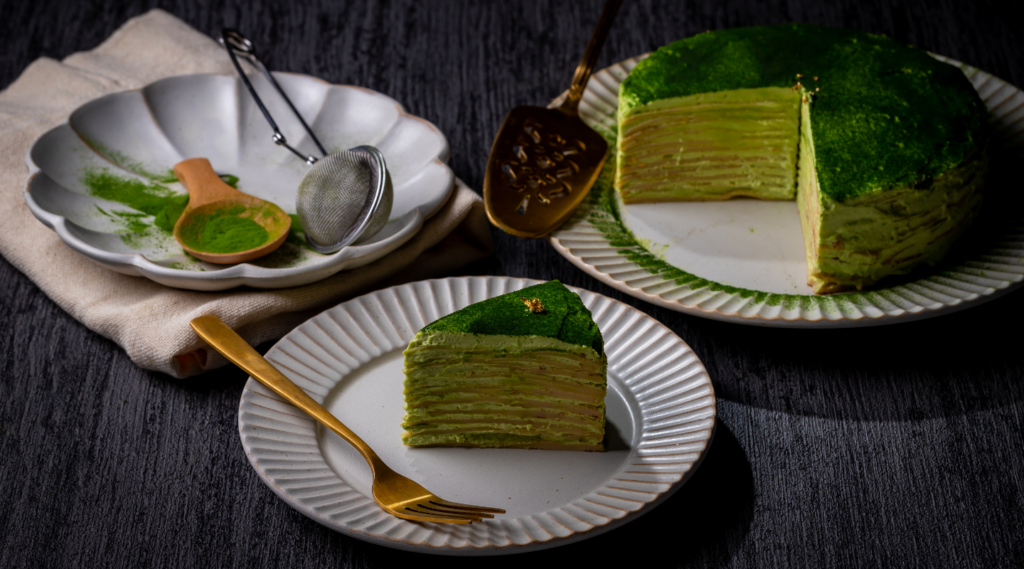
Baked Goods: The Easiest Entry Point
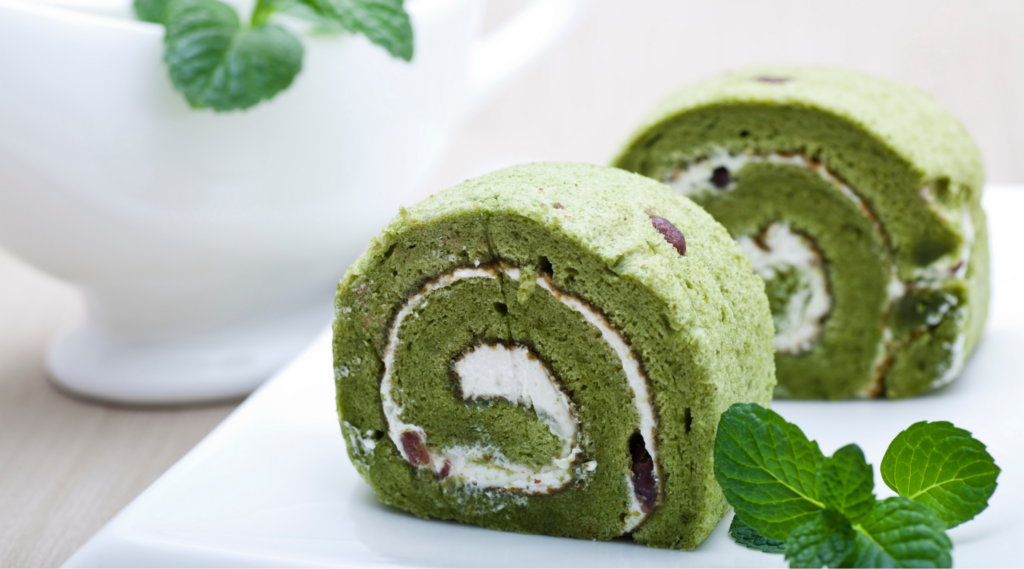
Baked goods are the lowest-effort way into matcha food. Croissants, cookies, pound cake, and muffins use the same base recipe as the original, with matcha powder swapped in for part of the flour or sugar. No new equipment and no new supplier relationship required.
Adding one or two matcha versions to an existing lineup builds a reputation as a cafe where matcha isn’t just a drink. These items also pair naturally with a matcha latte order, which lifts average check size.
Desserts: A Higher-Margin Showcase Item
Desserts are the next step up. Matcha soft serve, tiramisu, and cheesecake carry a higher price tag than a drink, and they give a display case real visual pull.
Being known for matcha desserts also plays well on social media and gives regulars another reason to come back. Pairing a dessert with a drink, or offering a matcha dessert course, lifts revenue per table further still.
Breakfast and Brunch: Reuse What You Already Prep
For cafes that already serve breakfast, matcha overnight oats, pancakes, and granola reuse existing prep steps. The morning slot is competitive, but a matcha breakfast item gives health-minded customers a reason to choose your cafe over another.
How to Add Matcha Food Items Without Overhauling Your Kitchen
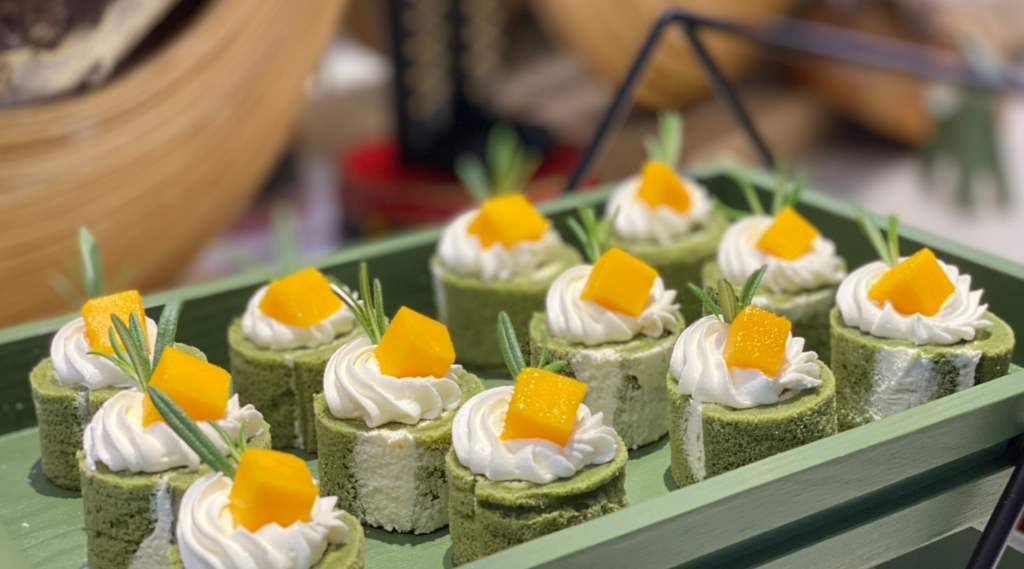
Start Small
Begin with one or two items your kitchen can already make. Adding a full new menu at once strains prep time and inventory. A matcha version of an existing recipe is the more realistic starting point — test it, then expand once it’s selling.
Match the Grade to the Use Case
Food doesn’t need the same matcha grade as your drinks. For anything mixed into batter, a latte-grade matcha holds its color and flavor better through baking than a ceremonial-grade powder does.
A blended latte-grade matcha like Irodori 2nd offers steady quality and supply, which keeps a recurring menu item’s cost easier to predict — an important factor when choosing what to bake with.
Test With a Limited-Time Offer
Before committing to a permanent food menu, run one item as a limited-time offer. Watching how it sells and how it affects kitchen workload first helps you avoid unnecessary waste before adding it to the case for good.
The Bottom Line
- Matcha food items raise average check size in a way drinks alone can’t, and give customers a reason to come back.
- As tencha prices keep climbing, food formats are a practical way to spread that cost across more than one product.
- Start with one or two baked goods, reuse what your kitchen already preps, and build slowly from there.
- Choose a stable, blended latte-grade matcha for food to keep costs easier to manage.
Looking for a grade that holds up well in your kitchen? Request a sample of Irodori 2nd and put it to the test.
【Disclaimer】
This statement has not been evaluated by the Food and Drug Administration. This product is not intended to diagnose, treat, cure, or prevent any disease.