Premium Matcha Explained: Meaning, Taste & Grade Differences


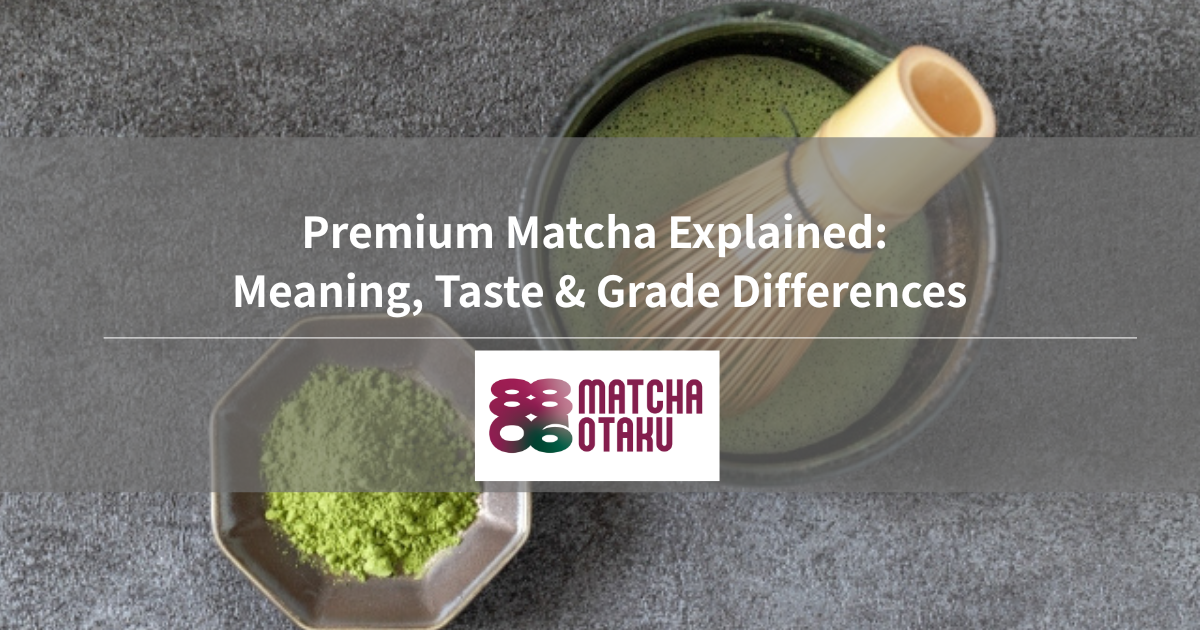
Do you want to enjoy delicious green tea without paying top-tier prices? You might feel confused by the many labels on matcha tins. You see terms like “Ceremonial,” “Culinary,” and “Premium,” but it is hard to know which one to pick.
This article will solve that problem. You will learn exactly what Premium Matcha is, how it tastes, and why it is often the best choice for your daily latte or tea.
We will explain the differences in simple terms so you can shop with confidence.

What Does Premium Grade Matcha Actually Mean?
“Premium Matcha” sits right in the middle of the matcha world. Think of it as the bridge between the very expensive tea used in ceremonies and the bitter tea used for baking cookies.
In the tea industry, “Premium Grade” usually refers to high-quality tea that is affordable enough for everyday drinking. It is made from young tea leaves, just like the highest grades. However, it might be harvested slightly later in the season.
This grade is perfect for people who want:
It is an excellent balance of quality and value.
What Does Premium Matcha Taste Like?
When you drink premium matcha, you should notice a complex and enjoyable flavor. It is distinct from regular green tea bags.
A high-quality premium matcha offers these flavor notes:
Unlike lower grades, it does not taste burnt or overly bitter. It feels smooth and creamy in your mouth.
Premium Matcha vs. Other Matcha Grades
To understand the value of premium matcha, we need to compare it to the other main types. The biggest difference lies in how the farmers grow and process the leaves.
Ceremonial vs. Premium vs. Culinary: What’s Different?
Ceremonial Grade is the highest quality. Farmers harvest these leaves first in the spring (First Flush). They are very delicate and ground into an ultra-fine powder. It is meant to be whisked only with hot water.
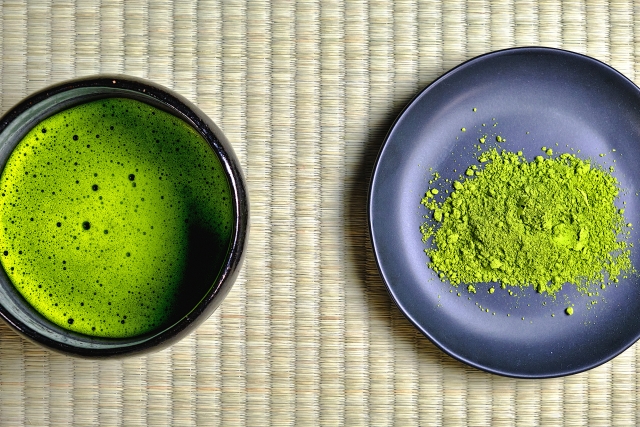
Premium Grade is often a blend of the first and second harvests. It retains a beautiful green color and plenty of nutrients. It is robust enough to mix with milk but smooth enough to drink alone.
Culinary Grade is designed specifically for cooking and baking. Harvested later in the season, these leaves have a stronger, more astringent flavor. This boldness allows the matcha taste to shine through when mixed with other ingredients like sugar, flour, or dairy.
Key Differences:
|
Feature |
Ceremonial Grade |
Premium Grade |
Culinary Grade |
|
Best Use |
Whisked with hot water (traditional style) |
Lattes, cold brew, or plain tea |
Baking, cooking, smoothies |
|
Harvest |
First harvest (Spring) |
First and Second harvest blend |
Second or Third harvest |
|
Flavor |
Very delicate, sweet, savory |
Robust, distinct tea flavor |
Strong, bitter, astringent |
|
Price |
Expensive |
Moderate |
Affordable |
Premium vs. Culinary Matcha: Can You Drink It?
Culinary Matcha (sometimes called “Kitchen Grade”) is designed for baking and cooking. It comes from older leaves harvested later in the summer.
Can you drink culinary matcha? You can, but you probably won’t enjoy it. It has a strong bitterness and a duller yellow-green color. This strong flavor is necessary to taste the tea through sugar, flour, and butter in cakes.
Premium matcha is much smoother. If you want a delicious drink, skip the culinary grade and choose premium.
Learn more about types of matcha.
Key Factors That Define High-Quality Matcha
How can you tell if a “Premium Matcha” label is telling the truth? Look for these three signs of quality before you buy.

Why Origin Matters: Uji, Kyoto, and Kagoshima
The region where the tea grows changes the flavor. Japan has strict standards for growing tea.
According to the Japan External Trade Organization (JETRO), these regions use centuries-old methods to ensure safety and taste.
Note
Always check the package to see if the tea is 100% made in Japan.
How Harvest Timing Affects Matcha Quality
The timing of the harvest is the biggest secret to quality.
Farmers cover the tea plants with shade for about 3 weeks before picking them. This blocks sunlight. This process boosts chlorophyll (which makes it green) and L-Theanine (which creates calmness and sweetness).
Is Premium Matcha the Right Choice for You?
Is Premium Matcha the best fit for your lifestyle? It is likely the right choice if:
If you are ready to upgrade your morning routine, premium matcha offers the best balance of taste, color, and cost.
【Disclaimer】
This statement has not been evaluated by the Food and Drug Administration. This product is not intended to diagnose, treat, cure, or prevent any disease.