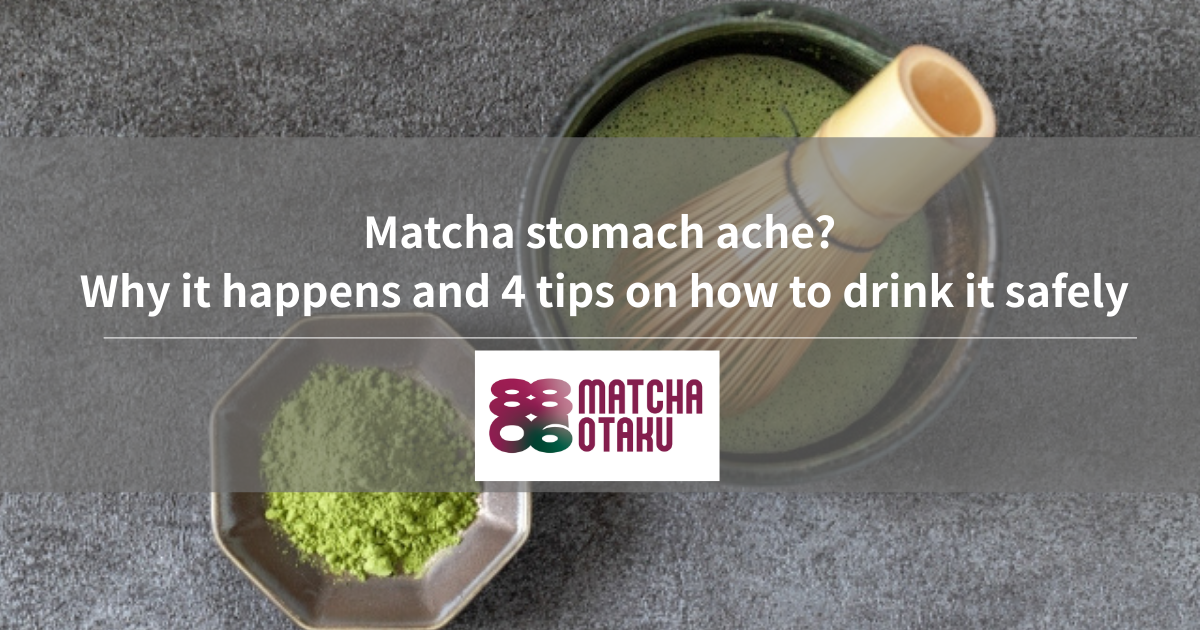
Matcha stomach ache? Why it happens and 4 tips on how to drink it safely


Are you trying to replace coffee with matcha, but you feel a matcha stomachache? You wanted clean energy, but you got nausea and cramps instead. This guide reveals the 3 hidden triggers of matcha-induced discomfort and teaches you the “Buffer Method” to protect your gut. You will learn how to enjoy premium green tea without ever feeling sick again.

What are the 5 main reasons for a matcha stomach ache? Let’s find the answer.
Understanding the why is the first step to a pain-free morning. Most Americans experience discomfort due to these specific biological triggers:
Are catechins or tannins irritating your stomach? How drinking on an empty stomach hurts.
Research from institutions like the National Institutes of Health (NIH) shows that tea polyphenols are powerful, but can be harsh on an acidic stomach.
Pro Tip: Always practice the “Food First” rule. Eating just a few almonds or a piece of toast creates a protective layer in your stomach.
Is it too much caffeine? Understand the unique way matcha caffeine affects your body.
Unlike coffee, matcha contains L-theanine, which provides a “slow release” of energy. However, for those with caffeine sensitivity, even 70mg can trigger the “fight or flight” response in the gut. If you feel shaky, try whisking your tea with more water (10 oz / 300 ml) to dilute the concentration.
Learn more about matcha caffeine content.
Is your matcha old? How oxidized or low-quality powder can damage your digestive system.
Quality isn’t just a luxury—it’s a digestive necessity. Low-quality culinary matcha is often made from older leaves that are naturally higher in bitter, stomach-irritating tannins.

Why does matcha cause diarrhea or constipation? The truth about your gut health.
Matcha is a powerful “moving” force for your digestive tract.
How much matcha is too much? Check the daily safety limit and common side effects.
According to the FDA, 400mg of caffeine is the upper limit for healthy adults. For matcha lovers, this means:
How can you prevent stomach pain while enjoying matcha? 4 simple habits for you.
- The “Milk Barrier”: Use Oat or Almond milk. The fats bind to tannins, making the drink silky and gentle on your stomach.
- Watch the Temp: Never use boiling water. Aim for 175°F (80°C) to prevent burning the leaves and releasing excess bitterness.
- The 20-Minute Rule: Wait 20 minutes after your meal before drinking matcha to maximize nutrient absorption and minimize irritation.
- Buy Lab-Tested: Ensure your brand tests for lead and pesticides, as these toxins are common causes of unexplained nausea.
Is a matcha latte safer for your stomach? How milk protects your digestive lining.
Yes! A latte is the #1 recommendation for beginners with sensitive stomachs. The proteins in the milk act as a buffer, slowing down the release of caffeine and acid-stimulating compounds. It’s the ultimate “stomach-friendly” hack.

Ready to Ditch the Nausea?
Stop buying “grocery store” matcha that ruins your morning. Our Ceremonial Matcha is shade-grown for 30 days to maximize L-theanine—the amino acid that naturally soothes your stomach.
【Disclaimer】
This statement has not been evaluated by the Food and Drug Administration. This product is not intended to diagnose, treat, cure, or prevent any disease.